
stra-ta studies what systems do when concurrency, persistence, hostile networks, scheduler noise, and broken assumptions enter the room. The lab exists to make bad behavior reproducible enough to argue about.

Targets produce behavior. Loki and Fenrir create difficult regimes. Kiln freezes and runs the campaigns. Ygg reads the executions. Committed evidence carries the claims.
 |
 |
 |
 |
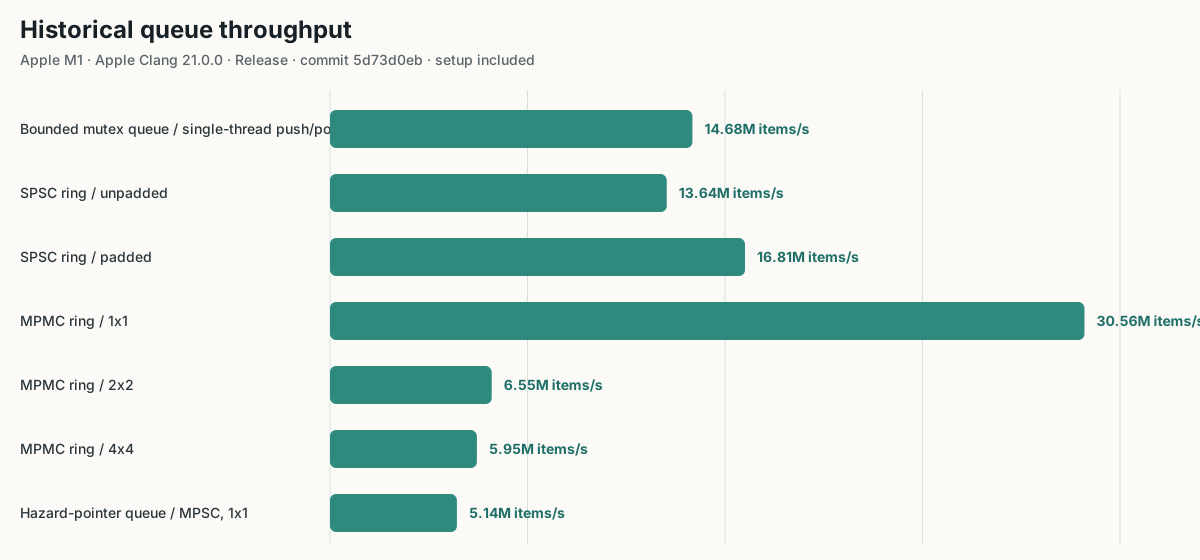
The lab separates functional CI from performance evidence. CI proves that a commit builds and passes its checks on the named runner. Performance claims need a committed manifest, raw measurements, machine metadata, and a link from the claim to those files.
The negative result matters too. Ygg's real Norn study did not separate backoff regimes from application events alone, so the next experiment needs scheduler and kernel signals.
| Project | Role | Current evidence |
|---|---|---|
| Norn | Queue and memory-ordering target | ARM64 campaign, x86 CI |
| Weir | Durable event gateway | Historical transport data, durability campaign pending |
| Loki | TCP and UDP fault injection | Deterministic ledgers and replay |
| Kiln | Reproducible experiment runner | Content-hashed campaign records |
| Fenrir | Adversarial workload search | Seeded search ledgers and canonical comparison |
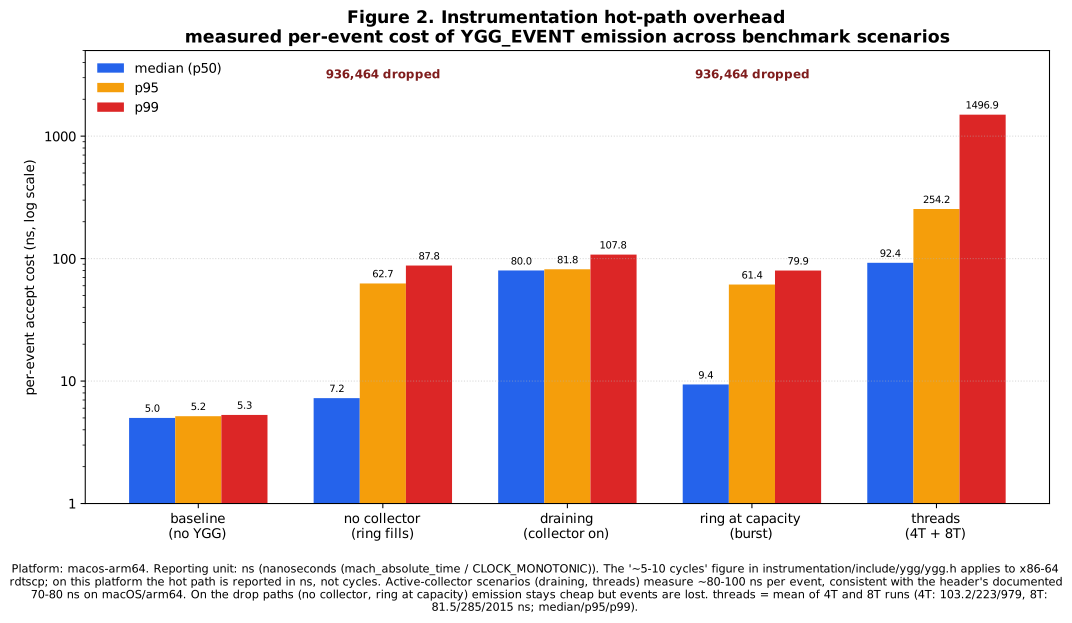
| Ygg | Trace analysis and change points | Instrumentation study and Norn negative result |
| Charlatan | Kernel/userspace boundary target | ARM64 VM integration and stress data |
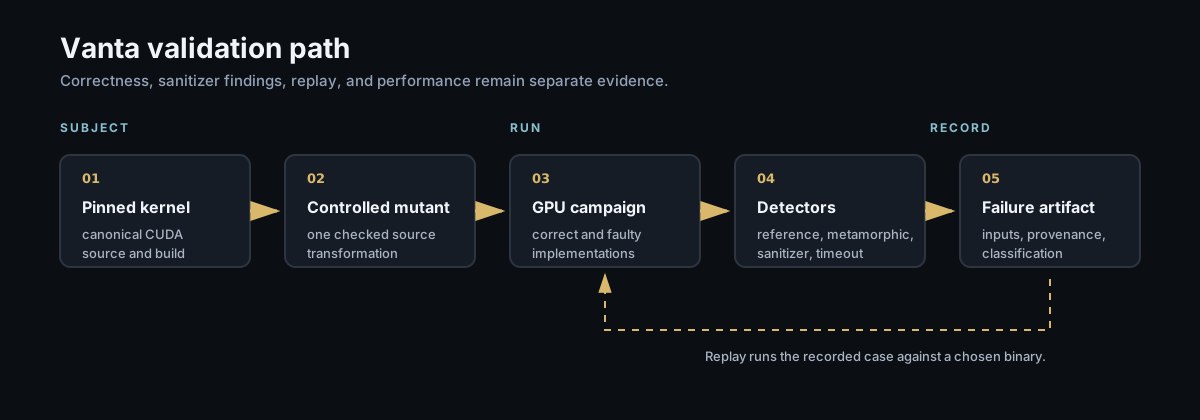
| Vanta | CUDA correctness target | Tesla T4 mutation campaigns |
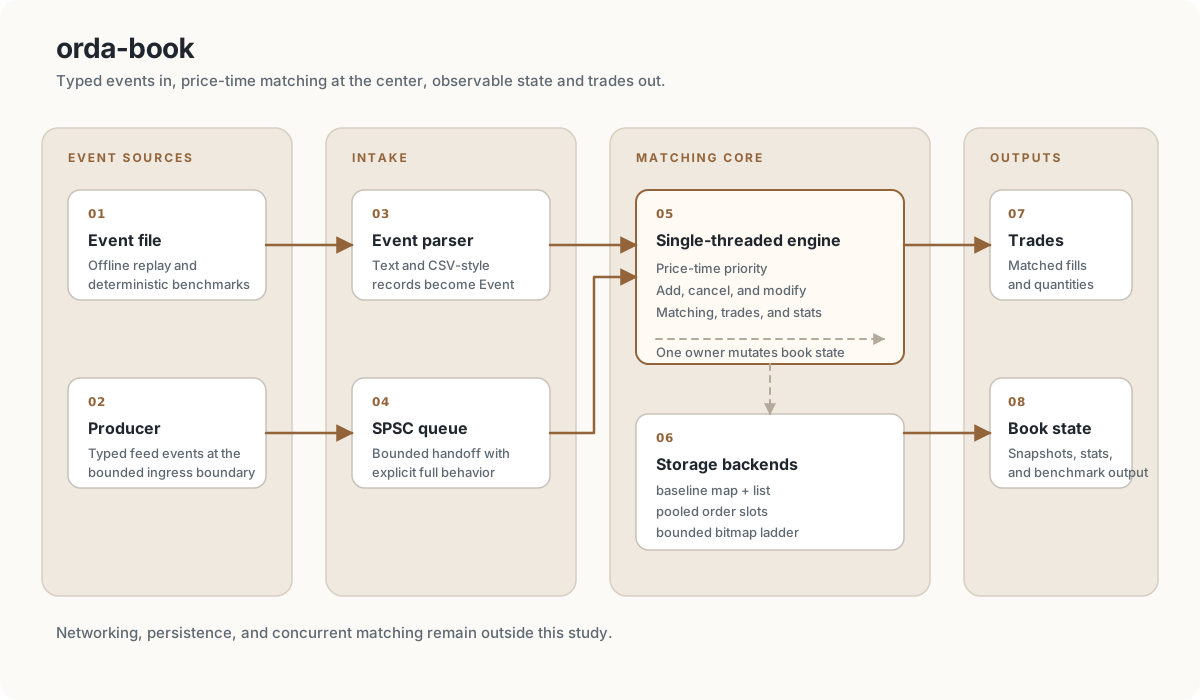
| Orda | Limit-order matching target | Benchmark reports with hardware caveats |
| raft-kv | Distributed-systems target | Deterministic simulator and TCP integration |
- Lab rules
- Evidence format
- Compatibility matrix
- Roadmap
- Finished experiments
- Negative results
- Reproducible bugs
- Systems questions
Experimental formats change. Old evidence is never silently reinterpreted, and CI runners are never presented as performance machines.
Maintained by @wheevu.