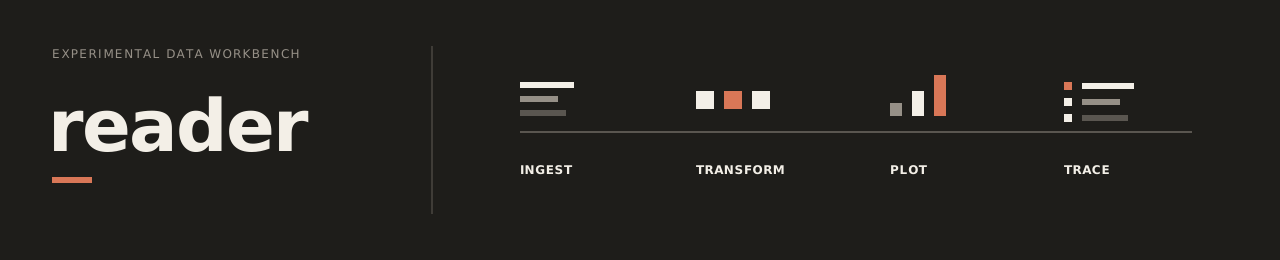


Reader ingests instrument files and experiment metadata, applies declared
transformations, and writes validated records, plots, exports, and notebooks.
Every unit of work—including a cross-experiment aggregate—has an owned directory
beneath experiments/, with source material in inputs/, a reader/v8
contract in config.yaml, and generated artifacts in outputs/.
The distribution and import package are named reader-workbench and
reader_workbench; the installed command remains reader.
Reader has not yet been published to PyPI. Install the current source release as a command-line tool:
uv tool install git+https://github.com/e-south/reader.gitFor development, install from a checkout:
git clone https://github.com/e-south/reader.git
cd reader
uv sync --locked --group dev
uv run reader demo
The installed command is reader:
reader demo
reader protocols
reader init ./experiments/my_experiment --protocol plate_reader/single_reporter_screen
The demo prints a guided command tour. It does not execute a pipeline or write files. Every generated starter can be inspected and validated before data is added.
- Getting started — install Reader, run the demo, and scaffold a first experiment.
- Common tasks — shortest commands for discovery, validation, execution, and automation.
- Python API — typed, task-oriented experiment and plugin interfaces for integrations.
- Documentation index — complete user, reference, and maintainer documentation.
Reader is available under the MIT license.